Saturday, 7 April 2012

MY 3 sketches

Visual treatment:
-Art movement : Cubism
-Reference artist :Pablo Picasso
-Theme : Environmentalism
-Idea/concept
     People have always been destroying their environment in different ways  some without knowing their for i used  this work to show how people can destroy their environment in different ways that they don't expect


 This is how ma picture looked at first wen  i painted in the original sketches


    This is on the process of painting when i was using the photoshop adobe here i was trying to put the pixels before and see the outcome


  After applying  different colours this is how my final work came as  a result when i trie to use the bucket for painting it almost coverd even the wood down that i wanted it to be seen so i had to use the painting brush to colour the green area


MY SECOND SKETCH :

Visual treatment
-Art movement :Cubism
-Reference Artist :Pablo Picasso
-Theme :Environmentalism
-Idea/Concept
        For the sketch  i have drawn below i was trying to show that there are many ways that people can use to maintain their environment and make it goo through the planting of trees also known as afforestation here are the processes to the final work and the out come
                                               
At first i wanted my picture to look this way but then i jus saw that green clour took place all over the whole picture and the people  could not be seen the i had to change
                                               
                                         
In this process i was  trying to put in the pixels since ma movement is cubism so as to create some cubes
                                                       

Finally i decide to  live my picture this way this was after getting different idea from people that if i would apply green  color the picture would have too much green so it looked good and attractive to me to this way and it is the one i choosed to print for my the exhibition

FOR MY LAST SKETCH :
Visual treatment
-Art movement :Cubism
-Reference artist :Pablo Picasso
-Theme :Environmentalism
-Idea/concept
      The main idea of my third sketch is almost like of the first sketch cause this sketch shows how lannd can be destroyed through over grazing
                                                                                                         

This is first how my original sketch looked like

This is the process of painting my picture were  i was thinking of making the land look green in color


             This is the process when i was creating cubes using the pixels                                    
                                                   

This is how the picture actually looked after creating the cubism but then i found that the picture could not be well seen and decided to let it look this way which was much better


     Therefore this is how my final sketch looked like.

*MY 3 FINAL SKETCHES


THE ONE FOR PRINTING:

                                                       
                                        ** THE END**                                                                                        

Sunday, 26 February 2012

Environmentalism

Name: Rachel Kaali
Series: Environmentalism
Art movement :Cubism
Reference artist: Pablo Picasso


Problem statement:
          The problems am going to focus in this topic  are how environment is polluted and different measure that can be taken to avoid environmental pollution through different sketches.


Purpose of content :
     To create awareness on  environmental pollution


Research content:

How can environmental pollution be avoided?
                                                               Smart area


                                                              Awareness


                                                                 Underground booms


                                                          Afforestation

                                                        Overgrazing
                                                     Afforestation and irrigation

                                                        Poisonous fishing


                                                         mass education
                                                           unity
                                                      Environment laws


Wednesday, 1 February 2012

ARTISTIC DESIGN 3 NEW POST

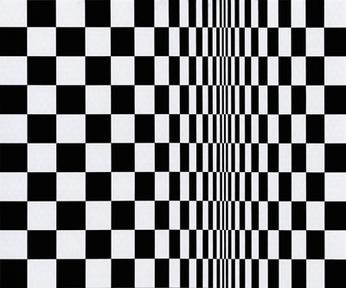
PERCEPTUAL ART:
perceptual art  is the type of art that can stimulate eyes of an obsever  to see things or images in different ways


http://upload.wik


CONCEPTUAL ART:
conceptual art is the type of art which intends to convey an idea or concept to the perceiver                


CONCEPTUAL ART:

onceptual art is art in which the concept(s) or idea(s) involved in the work take precedence over traditional aesthetic and material concerns. Many of the works, sometimes called installations, of the artist Sol LeWitt may be constructed by anyone simply by following a set of written instructions.[1] This method was fundamental to LeWitt's definition of Conceptual art, one of the first to appear in print:


In conceptual art the idea or concept is the most important aspect of the work. When an artist uses a conceptual form of art, it means that all of the planning and decisions are made beforehand and the execution is a perfunctory affair. The idea becomes a machine that makes the art.
An important difference between conceptual art and more "traditional" forms of art-making goes to the question of artistic skill. Although it is often the case that skill in the handling of traditional media plays little role in conceptual art, it is difficult to argue that no skill is required to make conceptual works, or that skill is always absent from them. John Baldessari, for instance, has presented realist pictures that he commissioned professional sign-writers to paint; and many conceptual performance artists (e.g. StelarcMarina Abramovic) are technically accomplished performers and skilled manipulators of their own bodies. It is thus not so much an absence of skill or hostility toward tradition that defines conceptual art as an evident disregard for conventional, modern notions of authorial presence and individual artistic expression (or genius).

]Example:the concerptual art by robert rauschenbe


In 1951 Rauschenberg created his "White Paintings," in the tradition of monochromatic painting, whose purpose was to reduce painting to its most essential nature, and to subsequently lead to the possibility of pure experience.[29] The "White Paintings" were shown at Eleanor Ward's Stable Gallery in New York during October 1953. They appear at first to be essentially blank, white canvas. However, one commentator said that "…rather than thinking of them as destructive reductions, it might be more productive to see them, as John Cage did, as hypersensitive screens – what Cage suggestively described as ‘airports of the lights, shadows and particles.’ In front of them, the smallest adjustments in lighting and atmosphere might be registered on their surface.[30]Rauschenberg himself said that they were affected by ambient conditions, "so you could almost tell how many people are in the room." The Black Paintingsof 1951 like the White Paintings were executed on multiple panels and were single colour works. Here Rauschenberg incorporated pieces of newspaper into the painting working the paper into the paint so that sometimes newspaper could be seen and in other places could not. By 1953-1954 Rauschenberg had moved from the monochromatic paintings of the White Painting and Black Painting series, to the Red Painting series. These paintings were created with diverse kinds of paint applications of red paint, and with the addition of materials such as wood, nails, newsprint and other materials to the canvas created complex painting surfaces, and were forerunners of Rauschenberg's well-known Combine series.[29]

[edit]

CUBISM:Cubism was a 20th century avant-garde art movement, pioneered by Pablo Picasso and Georges Braque, that revolutionized European painting andsculpture, and inspired related movements in music, literature and architecture. In cubist artworks, objects are broken up, analyzed, and re-assembled in an abstracted form—instead of depicting objects from one viewpoint, the artist depicts the subject from a multitude of viewpoints to represent the subject in a greater context. Often the surfaces intersect at seemingly random angles, removing a coherent sense of depth. The background and object planes interpenetrate one another to create the shallow ambiguous space, one of cubism's distinct characteristics.


 types of cubism
Analytic cubism

The invention of Cubism was a joint effort between Pablo Picasso and Braque, then residents of MontmartreParis. These artists were the movement's main innovators. A later active participant wasJuan Gris. After meeting in 1907 Braque and Picasso in particular began working on the development of Cubism. Picasso was initially the force and influence that persuaded Braque by 1908 to move away from Fauvism. The two artists began working closely together in late 1908–early 1909 until the outbreak of World War I in 1914. The movement spread quickly throughout Paris and Europe.
French art critic Louis Vauxcelles first used the term "cubism", or "bizarre cubiques", in 1908 after seeing a picture by Braque. He described it as "full of little cubes", after which the term quickly gained wide use although the two creators did not initially adopt it. Art historian Ernst Gombrich described cubism as "the most radical attempt to stamp out ambiguity and to enforce one reading of the picture that of man made construction a coloured cavans.


reference: by John Richard
Sir John Patrick RichardsonKBE (born 1924 in London) is a British art historian and Picasso biographer.
Richardson was born as the elder son of Sir Wodehouse Richardson, D.S.O.K.C.B., Quarter-Master General in the Boer War, and founder of London and the British Empire's Army & Navy Stores.[1]Initially, he wanted to become an artist;[2] he met and made friends with Francis Bacon[3][4][5] and Lucian Freud,[6] both of whom portrayed him later.[7] A month short of seventeen, he enrolled at theSlade School of Fine Art, was called up, but soon fell ill and spent the rest of the war with his mother and siblings in London.[8] During daytime, he worked as an industrial designer before becoming a reviewer for The New Observer.[9] In 1950, he became acquainted with art historian and collector Douglas Cooper, sharing his life for the next 10 years.
elements of design
shapes  are easily understood by obsever
colour used are different
texture is always smooth
value the picture are of different colours some dark and others  light


Principle of design:
It is well balanced
repeatition is rarely
unity


Artistic Design


rtistic design

PERCEPTUAL ART:
perceptual art  is the type of art that can stimulate eyes of an obsever  to see things or images in different ways.

example:


http://upload.wik
                     

CONCEPTUAL ART:
conceptual art is the type of art which intends to convey an idea or concept to the perceiver

example:
Circlet


Robert Holmes with Mr. GBronze sculpture for the new millennium cast from the mold of optimism.

Robert Holmes has been exhibiting sculptures over the past twenty-five years in the United States, Europe, and Asia. Holmes' work is represented in galleries throughout the States. The artist has had numerous one-man, group, and invitational shows. Many private and corporate collectors worldwide own and enjoy his art.

"Robert Holmes, although self taught, is intuitively dead center of the development of modern sculpture The restless, thrusting energy of Rodin, the abstraction of Brancusi, the expressionism of Lachaise, the symbolic power of Moore, are all echoed in his work."
-- Richard Warren, Art Historian- Princeton University, Stanford University, San Francisco State University, Curator of the Gualala Arts Center's "Robert Holmes Retrospective 1941-1998"

The artist obtained a Civil Engineering degree and architectural training from the University of Arizona. Because of these skills, Holmes has the technical expertise to interface easily with designers and architects. Both disciplines are evident in the structural elements of his technical prowess. "The grace and serenity of his human abstractions attest to a master's command of his medium and a sublime artistic sensibility. Robert Holmes' all too rare achievement is that of distilling the human form to its essential elements and capturing, within those essentials, postures of truly poetic feeling."
-- Review by David Betz, Assistant Director, Vorpal Gallery Soho, New York.

Uplifting emotions are a central theme in the work and as Holmes says, there is, "No politics, no horror, no shock, no ugliness. There's enough of that in the world!" Through the human form, Holmes conveys a Zen like serenity, grace, optimism, and strength. In alignment with this focus, UBS Warburg Bank in London and Paine Webber has recently acquired Holmes's "The Dancers" as the public face on their brochures. They feel this sculpture, which is installed in the UBS Bank in London, is a symbol of their new merger, "the art of the possible."

The artist has his foundry, Bronze + Inc. in Sebastopol, California, fifty miles north of San Francisco and his residence and studio at The Sea Ranch, which is further north on the California coast. Holmes feels he has control of the quality and precision of the casting process by owning a foundry. There, he creates semiabstract cast bronze figures in limited editions of 3 to 12, which range from table-size to larger-than-life. Holmes has this to say about his work: "My work is my statement. I don't believe that words go very far in describing sculpture. I would rather let people see my work itself and interact with it in their own way."
Jayne McGuire, in her review of Holmes' work for the August 2000 edition of Décor and Style Magazine, states:
"Holmes' contemporary figurative work, especially his life giving female figure, expresses a nurturing, universal quality which celebrates the joy of being, the joy of movement, and our basic human need for 'connectedness'. A consistent vitality is present in all of Holmes' figures, evident in the graceful movement of his dancers and runners, and in the solitary stillness of his reclining and seated figures

.EXAMPLE:
    

Adam and EveBalanceBolero - 3 Figures
CAVE HORSE, 4 FTCiciCirclet
Conversation IIDancers IVEcho
Flying DancerI am Seated PairI am Standing Pair
Next 12 Sculptures

"ELEMENTS OF DESIGN:
 Shapes can be easily understood by the obsever
 size of his sculptures is large
 colours he has used different colours in his sculptures
 texture used can be seen as smooth
 directions are different


PRINCIPLES OF DESIGN:
 balance:the sculptures are well balanced
 value:most of his sculptures are light and few with dark colur
 repeatition:not much  though some of the figure can be seen as looking alike.

conclusion:
from duing the research of different movements of drawings and sculpture  i have learned to differentiate between conceptual and perceptual arts and elements and principles of design within them.